


Your cart is empty :(


Your cart
Popular products you may like
KIT-SE31122022
Sensory Optical Effects Bag brings changing patterns, reflective surfaces and moving-liquid displays together in one portable collection. Families and practitioners can choose a small group of resources for an activity, then return them to the bag afterwards. The range offers several different ways to explore what children can see, touch and describe.
Look through the metal kaleidoscope and notice the arrangement of shapes and colours. Invite the child to describe a pattern before changing the view and comparing it with the next one. This gives words such as repeat, different, centre and edge a visible reference.
The five space blankets provide reflective surfaces with a very different feel from the rigid handheld resources. Spread one out with adult support and notice how folds change the appearance of reflected light. Keep blankets away from faces and introduce their texture and sound gradually according to the participant's preferences.
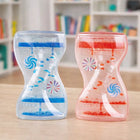
Turn a liquid timer over and watch the contents travel through it. Compare the movement with one of the spiral tube timers: what route does the liquid follow, where does it collect and what happens when the display is restarted? Ask children to predict one visible change, then watch together. These resources are for observation; do not treat different timers as calibrated measuring instruments.
Offer one timer to two observers so they can discuss the same event, or place two suitable resources side by side for comparison. A child can point, gesture or describe what they notice. There is no need to demand a spoken answer to take part.
Use the wooden magnifier to investigate a suitable leaf or another age-appropriate object supplied separately. Compare its appearance with and without magnification. Encourage children to notice a particular edge, line or surface detail rather than simply naming the whole object.
A short discovery session can combine looking closely, watching movement and exploring reflection. Keep unused items in the bag until needed so each experience has a clear focus. The light-up ball offers another visual effect, but introduce it only when its flashing light suits the people taking part.
Start with the magnifier and a suitable object, move to a liquid display and finish with a kaleidoscope pattern. Each stage asks a different kind of looking: inspect a small detail, follow something moving and notice a repeated arrangement. Give each resource its own time rather than making a rapid demonstration of the whole bag.
Afterwards, invite the child to choose one item to revisit. They may remember the object they examined, the path of a droplet or a colour in the pattern. Returning to that choice gives the adult a useful opportunity to expand on the child's own observation.
For a group, prepare a small number of supervised observation places. Keep resources appropriate to the age and abilities of the children at each place, and explain how they will move between them. The bag is a collection of different products, so supervision and handling may differ between activities.
Children can sort their observations into things that move, things that reflect and things that help them look closely. Some resources may fit more than one description, which is a useful reason to discuss a choice. Ask the child to show the feature they mean rather than requiring a particular vocabulary.
An adult can record a child's words or draw a simple picture on separate paper if a record is useful. At home, a brief conversation may be enough. The resource itself remains the focus, and the next activity can begin with a question the child raised.
A repeated visit might compare two timer routes more closely, look at another leaf through the magnifier or notice a different kaleidoscope arrangement. These are specific changes to the investigation rather than a need to introduce a new product every time.
Count the resources back into the bag after a session and keep any individual instructions with the set. Inspect reflective blankets for damage, check liquid-filled items for leaks and make sure light-up resources are ready for the next supervised activity.
Store separately supplied investigation materials elsewhere so the bag's contents remain clear. This helps staff or family members distinguish the purchased resources from the temporary items added for a particular session.
This collection combines several distinct optical and tactile resources with storage in one bag. It is useful when you want variety for supervised discovery without setting up a permanent display. Adults can select the resources that suit a particular session and return to familiar favourites.
Follow the instructions and age guidance for each individual item. Supervise use, keep space blankets away from the face and do not open liquid-filled resources. Inspect the collection before each session. Choose lighting effects appropriate for the participants and store the bag and unused contents out of children's reach.


